
There are few automotive headaches more frustrating than turning your key or pressing the ignition button, only to hear a faint click or complete silence. A sudden battery failure can leave you stranded at an unsealed beach car park, stuck before your morning commute along Pittwater Road, or delayed on your way through Mona Vale. Understanding how long a car battery typically lasts, along with the warning signs of impending failure, helps you replace a dying battery before it leaves you stranded.
At Peninsula Auto Clinic, our award-winning workshop has been helping local drivers stay on the move since 1994. Having served Northern Beaches motorists for over three decades, our team understands the unique environmental factors that impact battery lifespans in our local area. Here is a guide on battery longevity, local coastal conditions that accelerate wear, and how to tell when your battery needs replacing.
The Average Lifespan of a Car Battery
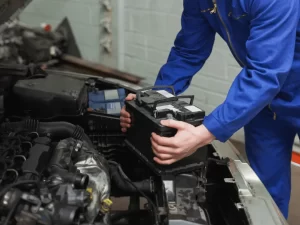
Under normal driving conditions, a standard 12-volt automotive lead-acid battery typically lasts between 3 to 5 years. However, this is a general baseline rather than a guarantee. Factors such as vehicle usage, battery quality, ambient temperatures, and charging system health all play a significant role in how many years you get out of a battery.
Modern vehicles place far greater demands on electrical systems than older models. Beyond turning over the starter motor, today’s batteries power intricate sensor networks, stop-start engine technology, digital touchscreens, dashcams, and advanced driver assistance systems. Consequently, even a minor drop in battery voltage can trigger unexpected dashboard warning lights or electrical glitches.
Local Factors That Shorten Battery Life on the Northern Beaches
Driving on the Northern Beaches involves several environmental and lifestyle conditions that can cause car batteries to age prematurely:
1. High Coastal Humidity and Salt Air Corrosion
Living near the ocean exposes your engine bay to airborne salt spray and moisture. Salt deposits can build up around battery terminals, creating a subtle conductive bridge between the positive and negative posts. This leads to parasitic corrosion and gradual voltage discharge, even while the car is parked overnight near Avalon or Palm Beach.
2. Frequent Short, Low-Speed Trips
Quick runs to the local shops or nearby beach carparks do not give your vehicle’s alternator enough time to fully recharge the battery. Over time, leaving the battery in a partially discharged state causes lead sulphate crystals to harden on the internal plates (sulfation), permanently reducing its capacity to hold power.
3. Extreme Summer Heat and Direct Sun
While cold winter mornings are famous for exposing weak batteries, intense summer heat is what actually damages them. High engine bay temperatures accelerate chemical reactions inside the casing, causing the internal liquid electrolyte solution to evaporate and corrode the internal lead grids.
Clear Signs Your Car Battery Is Failing
Car batteries rarely fail without giving a few subtle warning signs first. Keeping an eye and ear out for these indicators can save you from an unexpected breakdown:
- Slow or Sluggish Engine Crank: When starting the vehicle, the engine turns over slowly or sounds strained before firing up.
- Flickering or Dim Lights: Headlights, interior cabin lights, or dashboard displays appear unusually dim or flicker while idling at traffic lights along Barrenjoey Road.
- Corrosion Around the Terminals: A white, powdery, or bluish-green crust forming around the positive or negative posts indicates gas venting or terminal corrosion.
- Swollen or Bulging Battery Case: Extreme heat or overcharging can cause the plastic casing to swell outward, indicating severe internal damage.
- Illuminated Battery Warning Light: A battery or charging system icon appearing on your instrument cluster indicates an issue with the battery voltage or alternator output.
How do I Properly Maintain My Car Battery?
To ensure the car battery can be as healthy as possible for the longest of time is to:
- Turn off all accessories, such as lights and the car radio, when the car is not in use to prevent them from draining the battery
- Drive the car every once in a while if it does not get driven often for the battery to be in use
- Every month inspect the battery, the terminals and the connections. Looking for signs of corrosion or damage can mean the battery can be repaired sooner than later when an issue could have developed
Preventive Care and Battery Testing
The simplest way to avoid an unexpected flat battery is to include a digital voltage and load test as part of your scheduled maintenance. Combining a battery check with routine logbook car servicing allows qualified mechanics to test charge retention, inspect the alternator output, and clean terminal corrosion before it causes electrical failure.
If your vehicle struggles to start or if your battery is approaching four years of age, arranging a timely car battery replacement will give you total peace of mind on the road.
Rely on Peninsula Auto Clinic for Honest Mechanical Care
Whether you need an eSafety check for annual registration pink slips, electrical system diagnostics, or general mechanical car repairs, our experienced team provides clear advice and dependable service tailored to Northern Beaches drivers. We stock high-quality batteries designed to handle demanding coastal conditions and modern vehicle electronics.