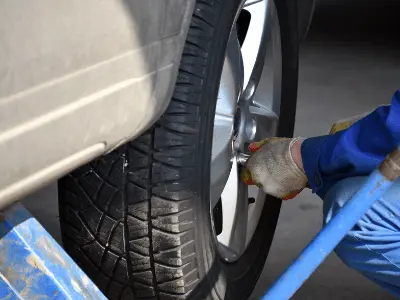
A flat tyre can happen when you least expect it, whether you are parked at an unsealed beach car park or driving along Pittwater Road during morning traffic. Knowing how to change a flat tyre safely is an essential skill for every Northern Beaches driver. With the right tools and a clear step-by-step approach, you can swap out a damaged wheel and get back on the road safely, with support always available from our Mona Vale workshop.
Driving conditions around Mona Vale and the surrounding coastal suburbs expose wheels to unique hazards. From hidden potholes and high kerbs near popular surf spots to salty air accelerating rim corrosion, staying prepared with a healthy spare tyre is crucial.
Essential Tools You Need in Your Vehicle
Before attempting to change a tyre, ensure your boot is equipped with the following items:
- Jack (scissor jack or hydraulic bottle jack).
- Wheel brace or lug wrench.
- Fully inflated spare tyre (space saver or full-sized spare).
- Vehicle owner’s manual (for exact jacking point locations).
- Wheel chock or heavy stone (to prevent rolling).
Step-by-Step Guide to Changing Your Flat Tyre
Follow these 10 straightforward steps to replace a flat tyre safely and efficiently:
- 1. Find a Safe, Flat Spot: Pull over as far off the road as possible on hard, level ground. Turn on your hazard lights and engage the handbrake firmly. Avoid stopping on steep coastal inclines or soft sand.
- 2. Secure the Vehicle: Place a wheel chock or sturdy rock behind the tyre diagonally opposite the flat one to prevent the car from rolling while lifted.
- 3. Remove the Hubcap or Wheel Cover: If your wheels have hubcaps or decorative nut covers, carefully pry them off using the flat end of your wheel brace.
- 4. Loosen the Wheel Nuts (Do Not Remove Yet): Use your wheel brace to break the initial resistance on each wheel nut by turning counter-clockwise. Keep the tyre firmly on the ground so it does not spin.
- 5. Position the Jack Correctly: Consult your owner’s manual to locate the designated jacking point near the flat tyre. Placing the jack against body panels can cause structural damage.
- 6. Raise the Vehicle: Crank the jack smoothly until the flat tyre is approximately 5 cm clear of the road surface.
- 7. Remove the Wheel Nuts and Flat Tyre: Fully unscrew the loosened nuts and carefully pull the flat wheel straight off the wheel assembly.
- 8. Mount the Spare Tyre: Align the rim with the wheel studs and push the spare tyre flush against the wheel hub. Hand-tighten the wheel nuts back onto the studs.
- 9. Lower the Vehicle Partially: Lower the jack until the spare tyre touches the ground enough to hold resistance, but without bearing the full weight of the vehicle.
- 10. Fully Tighten Nuts and Lower Completely: Use the wheel brace to tighten the nuts firmly in a star or criss-cross pattern to ensure even clamping pressure. Lower the car completely to the ground, remove the jack, and give the nuts one final check.
Important Post-Change Tyre Precautions
If you fitted a temporary space-saver spare, keep in mind that these tyres are designed only for short distances and strictly limited to speeds below 80 km/h. Driving extended distances on a space-saver strains your differential and compromises steering performance.
It is always crucial to inspect your spare tyre regularly. Spare tyres naturally lose air pressure over time while stored in your boot, and salty coastal conditions along Barrenjoey Road can even seize underbody winch mechanisms on modern 4WDs. Checking your spare’s pressure during every routine service ensures you are never stranded with an uninflated secondary tyre when emergency strikes.
Long-Term Tyre Care and Inspection
Once your spare is installed, visit a qualified mechanic promptly for a permanent tyre replacement and repair. Driving on mismatched tread depth or incorrect tyre pressures degrades fuel economy and affects handling stability.
Combining regular tyre pressure checks with routine maintenance guarantees maximum tread life across local driving conditions. Scheduling a comprehensive car service allows technicians to inspect tread wear patterns, rebalance wheels, and check suspension components for commuters travelling between Avalon, Mona Vale, and surrounding Northern Beaches suburbs.
If uneven wear is detected during a wheel change, addressing fundamental alignment or component play through a professional car repair assessment prevents ongoing damage to your new tyres.
Book Professional Tyre and Maintenance Support at Peninsula Auto Clinic
Trading in Mona Vale since 1994, our award-winning team at Peninsula Auto Clinic brings over three decades of trusted local experience to motorists across the Northern Beaches. Whether you need a puncture repair, a full set of new tyres, or a quick wheel balance, our workshop is fully equipped to keep you driving safely.
If you have recently used a spare tyre or need your tyres inspected by local specialists, call our friendly team on (02) 9999 2553 or visit our contact page to book your service today.