Driving around the Northern Beaches offers stunning coastal views, but navigating our local roads also comes with its fair share of hazards. After heavy rainfall or periods of severe weather, potholes quickly form across busy thoroughfares like Pittwater Road and Barrenjoey Road, as well as suburban backstreets and unsealed beach car parks. Hitting a deep, sharp-edged hole at speed can do far more than just jar your spine; it can inflict hidden, costly mechanical damage on your vehicle.
At Peninsula Auto Clinic, our Mona Vale workshop has been keeping local drivers safe on the road since 1994. Having served our community for over three decades, our team regularly inspects and repairs vehicles that have suffered steering, suspension, and wheel damage from unexpected road impacts. Here is a clear breakdown of how potholes harm your vehicle and what signs to watch for after an impact.
1. Severe Tyre Damage and Sidewall Bulges
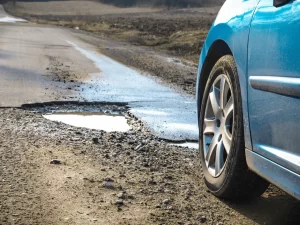
Your tyres are the only point of contact between your car and the road, making them the primary shock absorbers when hitting a pothole. The sudden, violent compression between the wheel rim and the rigid road surface can cause immediate or hidden structural damage:
- Tyre Punctures and Blowouts: Sharp asphalt edges can tear through the rubber tread or slice into the sidewall, causing rapid air loss.
- Internal Belt Separation (Sidewall Bulges): Impact can break the internal steel and fabric belts within the tyre structure. This creates a distinct bulge or bubble on the outer sidewall.
- Tread Distortion: Hard impacts can compromise tread integrity, leading to uneven wear patterns over time.
If you hit a harsh hole while driving through Narrabeen or Collaroy, inspect your tyres thoroughly. Booking a quick tyre replacement and repair assessment ensures damaged rubber is identified before a dangerous blowout occurs.
2. Bent, Cracked, or Scratched Wheel Rims
Modern vehicles often feature lightweight alloy wheels, which look fantastic but are susceptible to bending or cracking under severe impact force. Steel rims may bend, breaking the airtight seal between the tyre bead and the rim edge, causing a slow, persistent pressure drop.
Cracked alloy wheels compromise structural strength and cannot safely hold air pressure. Furthermore, constant exposure to salty beach air accelerates corrosion along exposed metal scratches or bends on the rim edge.
3. Steering and Suspension System Strain
Your vehicle’s suspension system is engineered to absorb normal road bumps and maintain tyre contact on steep coastal inclines. However, the extreme upward force generated by a deep pothole can push components far past their intended operating limits.
Pothole impacts frequently cause damage to:
- Shock Absorbers and Struts: Internal seals can burst, leaking hydraulic fluid and causing bouncy, unstable vehicle handling.
- Suspension Bushes and Control Arms: Rubber bushes can split, and steel control arms can bend out of alignment.
- Tie Rods and Ball Joints: Crucial steering linkage components can loosen or bend, leading to loose, unresponsive steering.
If your car drifts to one side, feels unstable, or clunks over speed humps after an impact, scheduling a comprehensive suspension service will restore ride comfort and handling stability.
4. Wheel Misalignment
Even if a pothole impact does not visibly break a component, it almost certainly knocks your wheel alignment out of specification. Misaligned wheels cause your tyres to scrub unevenly against the road, shortening their usable lifespan by thousands of kilometres and increasing fuel consumption along stop-and-start coastal routes.
5. Exhaust System and Underbody Damage
Vehicles with low ground clearance or small hatchbacks are particularly vulnerable to underbody scrape damage when entering and exiting deep road dips. The sudden drop can strike the lower chassis, causing severe issues:
- Exhaust Pipe Cracks and Dents: Impact can crush exhaust piping, crack oxygen sensors, or detach rubber mounting hangers, causing noisy rattles under acceleration.
- Oil Pan and Transmission Sump Scrapes: Dented or cracked fluid pans can leak vital lubricant, leading to severe engine or gearbox failure if unnoticed.
If you hear unexpected roaring noises or notice unusual smells under your car, having a technician perform an inspection for exhaust repair or fluid leaks is critical.
Warning Signs Your Vehicle Has Pothole Damage
After hitting a significant pothole, monitor your vehicle closely for these common red flags:
- Vibrations felt through the steering wheel or seat at cruising speeds.
- The vehicle pulling or drifting to the left or right on straight roads.
- Uneven or rapid wear along the inner or outer edges of your tyre tread.
- Knocking, clunking, or squeaking noises when driving over bumps or turning the wheel.
- Low tyre pressure warning indicators illuminating on your dashboard.
Rely on Peninsula Auto Clinic for Local Expertise
Whether you need a routine safety check, complete wheel balancing, or expert mechanical car repairs, our experienced team provides honest, reliable service tailored to Northern Beaches driving conditions. From checking suspension components to certifying annual pink slips, we help keep your vehicle running safely and smoothly.