Most car owners know that sticking to a regular service schedule keeps their engine running reliably, but few people ever get to see what goes on behind the workshop doors. Servicing a car is far more than just draining old oil and dropping in a fresh filter. It is a structured inspection designed to identify subtle wear, prevent roadside breakdowns, and extend the lifespan of your vehicle.
Along the Northern Beaches, cars face an unusually harsh operational environment. Daily commutes down Pittwater Road feature constant stop-and-start traffic, while ocean breezes carry airborne salt that accelerates underbody corrosion. Sandy unsealed parking spots near beach tracks also send fine grit directly into suspension bushes and brake assemblies. Here is a clear breakdown of how a comprehensive vehicle service unfolds when your car hits the hoist.
 Engine Oil and Filter Renewal
Engine oil is the lifeblood of your vehicle. Over time, heat, friction, and combustion byproducts break down the oil’s viscosity and chemical additives, turning it into a dark, sludge-like fluid that can no longer lubricate internal bearings or dissipate heat effectively.
During a service, the engine is run up to operating temperature so the oil flows freely, carrying suspended contaminants out through the sump drain plug. Once fully drained, a new filter is fitted and fresh, manufacturer-approved synthetic or semi-synthetic oil is filled to the exact dipstick level.
Fluid Inspections and Hydrometer Testing
A vehicle relies on several vital fluids beyond engine oil. Each fluid serves a specific protective or mechanical purpose and requires testing during a routine maintenance check:
- Brake Fluid: Hydraulic brake fluid is hygroscopic, meaning it absorbs moisture directly from humid coastal air. Over time, water content lowers the fluid’s boiling point, creating a spongy pedal feel under heavy braking. Testing moisture percentage determines when a system flush is required.
- Coolant and Antifreeze: Radiator coolant prevents overheating in heavy traffic and stops internal corrosion inside aluminium engine blocks. Refractometer testing checks concentration levels and chemical pH balance.
- Power Steering and Transmission Fluids: Checked for clarity, correct volume, and signs of thermal breakdown or metallic debris.
Braking System and Undercarriage Safety Checks
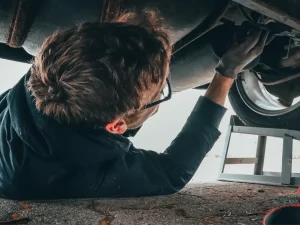
While the car is elevated on the hoist, technicians carry out a detailed undercarriage evaluation. This is where trained hands catch small issues before they escalate into expensive repairs.
Beyond measuring brake pad thickness and checking rotors for scoring, technicians pay close attention to the rubber boots protecting drive shafts and steering racks. In coastal areas, salt air hardens rubber components, making them prone to splitting. Catching a torn boot early prevents dirt contamination and saves you from replacing an entire CV axle or steering gear assembly down the line.
Intake Filters and Battery Health Diagnostics
Back at ground level, focus shifts under the bonnet. The engine air filter is checked for dirt buildup, as a clogged filter restricts airflow and increases fuel consumption. Similarly, the cabin air filter is inspected to ensure clean, dust-free ventilation inside the passenger compartment.
Batteries are subjected to a digital load test. This measures cold cranking amps (CCA) and alternator charging rates. Salty air around suburbs like Collaroy and Elanora can speed up terminal oxidation, so terminals are cleaned and protected against corrosion.
Tyre Inspection and Safety Checks
Tyres are your vehicle’s only connection to the tarmac. A thorough service includes evaluating tread depth across the full width of all four tyres to check for abnormal edge wear. Uneven shoulder wear usually signals misaligned suspension or incorrect tyre pressures.
If your tyres are showing signs of heavy wear or sidewall damage, having our local workshop perform a professional tyre replacement and repair check keeps your steering responsive and your wet-weather braking distances safe.
Final Diagnostics, Road Testing, and Logbook Stamping
Once all physical checks are complete, a diagnostic scanner is connected to the vehicle’s onboard computer to check for stored fault codes and reset service indicators. Finally, a road test verifies gear shifting, pedal feel, and suspension quietness under real driving conditions.
If your vehicle is within its warranty period, completing scheduled maintenance at an accredited workshop keeps your factory warranty 100% valid. Regular logbook servicing also preserves your car’s resale value and ensures it remains compliant for annual safety inspections such as pink slips.
Book Your Vehicle Service at Peninsula Auto Clinic
Whether you drive a daily commuter, a family SUV, or a European vehicle, keeping up with regular maintenance prevents unexpected roadside stress. The experienced team at Peninsula Auto Clinic provides thorough, transparent mechanical work tailored to your vehicle’s exact manufacturer guidelines.
To arrange your next comprehensive car service or talk through a mechanical question with our technicians, call 02 9999 2553 or get in touch through our contact page today.