A flat tyre can transform a peaceful coastal drive down Barrenjoey Road or a trip home from the beach into an immediate roadside nuisance. Modern vehicles come equipped with various temporary mobile solutions, ranging from full-sized matching wheels to space savers or tyre repair sealant kits. Understanding how your vehicle’s spare tyre functions, its operational limits, and how coastal driving conditions impact inflation pressure is essential for every Northern Beaches driver.
At Peninsula Auto Clinic, our local Mona Vale workshop has been keeping drivers safe and mobile since 1994. With over 30 years of trade history under directors Sam & Caroline Madikian, our experienced team focuses on practical maintenance that prevents unexpected delays. Here is a comprehensive guide to understanding your spare tyre, how to care for it, and what to do when a puncture strikes.
Understanding the Different Types of Spare Tyres
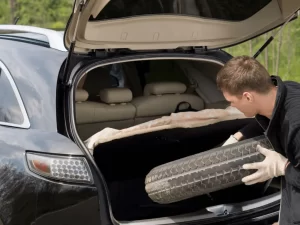
Car manufacturers outfit modern vehicles with distinct spare tyre setups depending on boot space, weight distribution, and vehicle design. Knowing which option sits beneath your boot liner helps you respond appropriately during an emergency:
- Full-Sized Matching Spare: The most convenient setup, featuring a fifth wheel that matches the dimensions, tread pattern, and speed rating of your road tyres. Once fitted, you can continue driving normally without restrictive speed limits.
- Full-Sized Non-Matching Spare: Features identical dimensions to your road tyres but uses a different steel rim design or tread compound. It provides full driving capability but should eventually be rotated back out for a matching wheel setup.
- Space Saver (Compact Temporary Spare): Smaller and significantly lighter than standard tyres, designed purely to save boot space. Space savers carry strict operational restrictions, usually a maximum speed limit of 80 km/h and a distance limit of around 80 to 100 kilometres.
- Tyre Inflation Repair Kits (Liquid Sealant & Compressor): Many modern vehicles skip physical spare wheels altogether, substituting a bottle of chemical liquid sealant and a small 12V air pump. These kits temporarily seal small tread punctures but are ineffective against sidewall tears or rim damage.
Why Coastal Driving Demands Spare Tyre Maintenance
It is surprisingly common for motorists to drop their spare tyre onto the bitumen after a puncture, only to discover the spare itself is completely flat. Living on the Northern Beaches introduces specific environmental challenges that degrade stored tyres quietly over time:
- Underbody Corrosion on Exterior-Mounted Spares: Many SUVs, utes, and 4WDs mount their spare tyre underneath the rear chassis or on the tailgate. Salty beach air off Mona Vale Beach and wet sand from unsealed beach carparks cause steel winch cables and mounting bolts to seize, making the tyre impossible to lower during a roadside emergency.
- Slow Air Pressure Depletion: Tyres naturally lose air pressure over time through rubber permeability. A spare wheel sitting untouched in a warm boot cavity for twelve months can easily drop safe operating pressure below.
- Dry Rot and Rubber Degradation: Rubber compounds age and harden over time, even without active tread wear. A spare tyre over six years old can develop unseen sidewall micro-cracks that risk sudden blowouts under load.
Essential Step-by-Step Breakdown: Changing a Flat Tyre Safely
If you encounter a flat tyre while driving along Pittwater Road, remaining calm and pulling into a safe, flat location is step number one. Follow these key mechanical safety steps:
1. Secure the Vehicle on Flat Ground
Pull completely off the main roadway onto hard, level ground. Turn on your hazard lights, engage the park brake firmly, and place manual vehicles in first gear or reverse.
2. Loosen Lug Nuts Before Jacking
Using your wheel brace, loosen the tightness of each lug nut by half a turn while the tyre is still resting on the ground. Trying to loosen overtightened wheel nuts while the car is raised on a jack will cause the wheel to spin freely and can unbalance the vehicle off the jack stand.
3. Position the Jack Correctly
Locate the reinforced steel jack points specified in your owner’s manual along the vehicle’s sill panel. Raise the car until the flat tyre sits roughly 3 to 5 centimetres clear of the road surface.
4. Mount the Spare and Tighten in a Star Pattern
Remove the lug nuts completely, swap the flat wheel with your spare, and hand-tighten the nuts. Lower the vehicle until the tyre lightly touches the ground, then tighten the lug nuts securely using a crosswise star pattern to ensure even clamping force across the brake hub.
Restoring Full Driving Safety After a Puncture
Temporary spares and repair kits exist solely to get you safely to a qualified tyre workshop. Leaving a space saver on your vehicle for daily driving puts unnecessary strain on your differential and reduces braking efficiency in wet weather.
Combining spare tyre pressure checks with your regular car service or annual pink slips inspection ensures your jack, tools, and spare rubber are always road-ready. If your flat tyre cannot be safely patched due to shoulder damage, a quick tyre replacement and repair gets your vehicle back onto a matching set of high-traction tyres.
Book Your Tyre and Safety Check in Mona Vale Today
Need your spare tyre pressure checked, a puncture inspected, or a fresh set of tyres fitted for peace of mind? Put your trust in the local trade experts in Mona Vale.
Call our friendly team today on 02 9999 2553 or schedule your appointment online via our contact page. Located conveniently at 7 Perak Street, Mona Vale, we are here to ensure your vehicle stays safe, reliable, and ready for the road ahead.