Your vehicle’s electrical system relies on two main components to keep running smoothly: the battery and the alternator. While the battery provides the initial surge of power needed to crank the engine, it is the alternator that keeps your lights burning bright, your air conditioning humming, and your electrical modules powered once you are on the road. Navigating stop-and-start traffic on Pittwater Road or tackling steep coastal inclines around Bilgola and Elanora places a continuous electrical and mechanical load on your charging system.
At Peninsula Auto Clinic, our award-winning Mona Vale workshop has been keeping Northern Beaches motorists safe and mobile since 1994. Having served local drivers for over 30 years under directors Sam & Caroline Madikian, our experienced mechanics know that catching charging system problems early prevents frustrating breakdowns on the side of the road. Here is a clear guide on how your alternator works, the most common warning signs of failure, and what to do when your car shows symptoms.
5 Common Warning Signs Your Alternator Is Failing
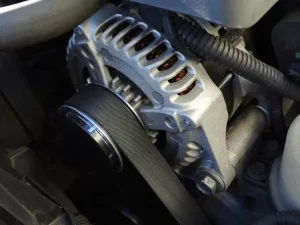
An alternator rarely gives out without offering a few subtle clues beforehand. Paying attention to these early warning indicators can save you from getting stranded in a beachfront carpark with a dead battery.
1. Dim, Flickering, or Unusually Bright Lights
Because the alternator supplies electricity to your headlights, cabin lamps, and dashboard displays, inconsistent voltage output directly impacts lighting. You might notice your headlights dimming when idling at traffic lights on Barrenjoey Road and brightening as you accelerate, or dashboard instrument panels flickering intermittently.
2. The Battery Warning Light Illuminates
Modern vehicles feature a battery-shaped warning light on the instrument cluster (often labelled ALT or GEN). Contrary to popular belief, this icon rarely indicates a faulty battery alone. It illuminates when the Body Control Module detects that the system voltage has dropped below or spiked above the ideal operating threshold (typically between 13.5 and 14.5 volts).
3. Growling, Whining, or Squealing Noises from Under the Bonnet
Alternators operate via a serpentine drive belt connected to the engine crankshaft. If the belt becomes loose, misaligned, or glazed over, you will hear a high-pitched squealing sound on start-up. Internal bearing failure inside the alternator casing generates a distinct growling or whining noise that changes pitch with engine speed.
4. Frequent Engine Stalling or Difficulty Starting
If your engine turns over slowly or stalls shortly after starting, the alternator may no longer be generating enough power to keep the fuel injectors and spark plugs firing smoothly. Without sufficient current, the vehicle relies entirely on residual battery power until the charge depletes completely.
5. Electrical Accessories Malfunctioning or Slow Window Operation
When charging voltage drops, your car’s computer begins prioritising essential systems by cutting power to non-critical accessories. You might notice power windows rolling up at half speed, seat heaters failing to warm up, or the radio switching off unexpectedly while driving.
How to Tell the Difference: Bad Alternator vs. Flat Battery
It is very common for drivers to confuse a dead battery with a failing alternator, as both result in a car that won’t start. A simple diagnostic routine can help clarify the issue:
- Jump-start test: Jump-start your vehicle using standard safety procedures. If the engine starts and continues to run smoothly after you disconnect the jumper cables, the alternator is likely doing its job, and the issue points to an expired battery. If you need a quick replacement, a direct car battery replacement will solve the problem.
- Immediate stall test: If the engine dies almost immediately after removing the jumper cables, the alternator is failing to supply electrical current to keep the engine running, placing the entire burden back on the drained battery.
Preventing Roadside Stalls with Professional Diagnostics
Ignoring alternator warning signs puts excessive strain on your starter motor and ruins healthy batteries through repeated deep discharges. Combining regular charging system checks with your routine car service or annual pink slips inspection ensures your alternator, drive belts, and battery connections remain in top working order.
Whether you commute daily from Avalon, Bilgola, or Elanora, our qualified technicians use digital multimeter diagnostic equipment to test alternator diodes and voltage output accurately, handling all essential car repairs under one roof.